
Articles Tagged with Networking

20 Ways That Freelancers Can Drum Up Sales During Quieter Times

WILL DROP PANTS 4 FOOD sign
(Note: that’s not me in the pic!)

Whether you call yourself a freelancer, a solo/independent consultant, a solopreneur or maybe even something else entirely, one of the biggest challenges that we face as one-person bands is the ability to balance our workloads effectively – in particular by keeping the sales pipeline filling up while we’re busy working on other projects.

And I can speak about this from recent personal experience…

I have a confession to make…

I dropped the ball on the sales front earlier this year. After a busy Q4 in 2014 (resulting in December being my most successful month income-wise to date at the time) and a very busy January running CR 25 single-handedly, followed by two large one-off projects in Feb-Mar (which both overran), I was simply too busy to fit sales into the mix.

Big mistake.

Then in April: quiet. Well… I had enough to keep me going, but things were a lot quieter than I was used to. It was my quietest period since my first three months in business (way back in the summer of 2013) and therefore in over 18 months. Yikes.

Things have picked up rather nicely since then, but I wanted to take the time to blog about some of the ways that I went about drumming up new business during that quiet spell. And while working on this list of sales tactics for freelancers, I just kept adding more and more ideas to it and ended up with 20 different ways…! For the record though, you might not see some tactics that you’re expecting to see… For example, I don’t condone cold-calling, door-to-door sales or any other type of ‘interruptive’ marketing like that, so that won’t be in the list below. I’m also not keen on freelancer marketplace websites (e.g. PeoplePerHour) – I’m not saying that they don’t work, they’re just not for me, and I’m sure that there are other freelancers who feel the same way.

…So what else can you do?

A slight disclaimer: some of these are probably really obvious, but if fellow freelancers (SEO or otherwise) browse the list, see 2 or 3 points and think to themselves: “damn, why didn’t I think of that?” then that’ll do for me…! 🙂

First things first…

1) Remove any “I’m not available” type messages from your blog/website

"Not available" message example screenshot
Taken from Formfett

If you’re in a position to network and drive leads and enquiries your way, the last thing that you’ll want to do is to put people off with a message on your site that says “I’m unavailable at the moment” or “I’m unavailable until [future date]”… It’s all well and good to have this on the site when you are full-up capacity-wise, but be sure to remove it when you aren’t and when you’re actively seeking work. While this might seem really obvious, it’s crucial that you make sure to remember to remove the message everywhere and anywhere it’s featured: is it on your Contact page / your Hire Me page / site-wide? For me, it was on this very blog’s Hire Me page and my freelance site‘s Contact page, but it could be disasterous if I only remembered to remove it off one of the pages and not the other – so be sure to remember to do it…!

As an aside… Some people swear off using these type of messages entirely, which is fair enough (after all, what if a dream enquirer sees it and it puts them off from enquiring?), but @ChrisLDyson of Triple SEO raised a good point that it usually still brings in the more serious enquiries while putting off the “can I just get a quote?” types. Besides, they might not read it anyway and just get in touch regardless.

Right, got that sorted? Good. Onto the next one…

Leveraging existing business relationships

2) Touch base with old clients

If you work with clients directly and you’ve already done work for somebody – maybe on a one-off basis – and you left things on good terms, then it makes sense to touch base and catch up on their current situation. Maybe they’re in need of more of your assistance?

I did some one-off consulting for two companies in the past year and decided to email them asking how things were going. Both of them said that my timing was perfect, that they’d be keen to reconvene things – and I’ve already been to see one of them (the other one is still keen but they’re going to leave it another month or two). Nice and easy.

Obviously this only really works in certain circumstances – for example, if you stopped working with a client because their budget ran out/got cut, or they’ve gone ahead with another supplier, or they’ve brought the service in-house instead, then you may want to give those ones a miss. But think back to all your old clients and get in touch with those who loved what you did for them and might need more of the same.

3) Touch base with your main referral partners (e.g. agencies)

Who usually passes you work? In my case, as an SEO, I get a fair bit of work from web design agencies and PR agencies. Similar to the point above, get in touch with those that you’ve worked with before and find out if any of their clients currently need help with anything.
Click to read more!

Offline (Face-To-Face) Networking For SEOs: My #maximpact Guest Slot

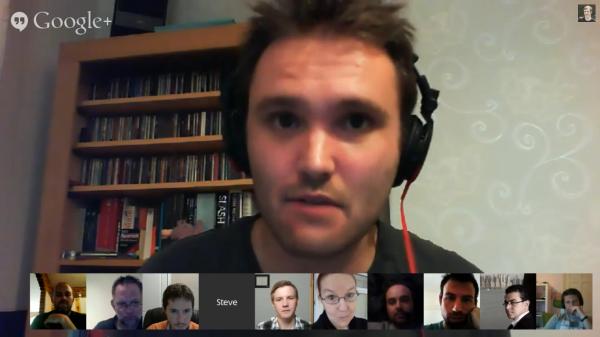
#maximpact Hangout screenshot
#maximpact Offline Networking logoI’ve been a huge fan of Max Minzer’s #maximpact series of Google+ Hangouts On Air ever since I first discovered and joined in on one back in August last year. Since then, I have become a regular attendee, alongside the likes of the mighty Steve Webb (a.k.a. US Steve), Barrie Moran and Tony Dimmock.

43 episodes and nearly a year later, I was delighted to be asked to be the main speaker on a topic close to my heart: offline, face-to-face networking for SEOs. The Hangout took place this past Thursday (24th July).

During the Hangout we talked about:

  • My networking approach, which is not to sell – just getting to know people, listening to them and answering any questions that they have. “Anti-sales is the best kind of sales.”
  • Going to events on your own. What’s best to do? Try and go where you know someone is going, or bring a friend with you.
  • How networking doesn’t have to be seen as your traditional business networking events. Networking is what you make of it. You can network at social meetups (just so long as you don’t just sell, sell, sell – that’s sleazy). Just give people help and advice.
  • Researching events before you go – e.g. finding out who else is attending.
  • Networking at events where you’re also speaking, especially in terms of keeping calm or not acting too aloof or egotistical!
  • Networking at conferences, of both the SEO and non-SEO variety.
  • Not being one of those networkers who tries to leave a conversation the moment they realise that the person they’re talking to isn’t a potential customer/client – it’s not about selling to the person in front of you, it’s about getting to know them and vice versa. “You have no idea who knows who.”
  • Using social media (especially LinkedIn) for following up and keeping in touch with people after you’ve met them in person.
  • How to handle ‘hecklers’, i.e. people who have a negative impression of SEO when you meet them.

Here’s a link to the event page on Google+, which contains a few comments as well as a video embed, which I’ve also included below:

I also have an interview with Max in the works (similar to some of the interviews I’ve done before), which I hope to publish very soon.

My Ignite Cardiff Talk: What Skyrim Taught Me About Business Networking

Ignite Cardiff logoSometimes I give professional talks. Sometimes… less so.

It was an absolute pleasure to speak at Ignite Cardiff‘s eleventh event in May. I was supposed to speak at IC #10 in February, but pulled out at the very last minute due to illness (as reported previously).

My talk topic? What Skyrim Taught Me About Business Networking. Here’s the video:

If you’d like to check out the slides separately and in more detail, here they are for you:

Click to read more!

SEOno News & GB Posts: Part 1

In a few previous posts, I’ve talked SEOno news as well as guest blog posts I’ve written for other sites. Rather than having them as random, standalone posts, like some of the previous few, I thought I’d start a series of them, as-and-when I have anything to share.

News

SEOno is in dire need of a proper custom design, but with my third and final instalment of my CAM Diploma course coming up over the next few months, it may be a couple of months off just yet. Besides, I prefer writing, so if I have to choose between the two, I’d much rather write a new post than go overboard with the blog’s design. Still, it’s something I have in mind (it’s just a matter of ‘when’)!

Guest Blog Posts

I’ve been quite busy the last few months, mainly writing stuff on behalf of Liberty Marketing:

I’ve had two posts published by the wonderful Ann Smarty (@seosmarty):

Local networking connection Rob Warlow (@bizloanservices) kindly posted Leveraging (Offline) Networking for SEO and Online Marketing on Small Business Success, his business advice website.

I published a guest blog post on social media, called Social Media’s Chicken & Egg: Should You Put Content or Followers First? for Opportunities Planet.

Last but not least, a recent post on behalf of both Liberty and Computer Recruiter is one I’m particularly proud of: How to Find Jobs Using Twitter Search for the GO Wales blog. This is a sort of follow-up to a similar post I wrote a while back for the Liberty blog on finding jobs using Google, however I think this one about Twitter Search is better explained and laid out. If anyone gives it a go then I’d love their feedback on it.

I have a few more exciting guest blog posts planned, which I’ll share in Part 2…

Brighton SEO

My Top 10 Takeaways from #BrightonSEO April 2012

Brighton SEO
The only pic I took – terrible quality, I know!

Having been in SEO for over 3 years now, attending a conference was long overdue. Thankfully, we won some tickets to Brighton SEO and so I headed there with Liberty colleagues Andrew (@Andrew_Isidoro / @SEOFoSho) and Ceri.

While Andrew tweeted like a madman (this tweet sums it up well!), I made a ton of notes, equalling 1,000 words – good fun on an iPad, let me tell you…!

Anyway, here are my top 10 takeaways from the event:

1. Bing: Social is a “strong signal” for content
Talk: Panel – Ask the Engines with Pierre Far, Dave Coplin, Martin McDonald, Rishi Lakhani & Tony Goldstone

Straight from the horse’s mouth – Bing’s Director of Search Dave Coplin explained that social is used as a ranking signal in Bing. He even specified that they definitely take Facebook and Twitter into account, and those whose efforts are “bloody good” will be rewarded with better rankings.

2. ISO DateTime gives search engines context to dates
Talk: Microformats & SEO – Glenn Jones, @glennjones

I’m still fairly new to the head-scratching-inducing world of schema.org and rich snippets, but I thought it was cool that “ISO DateTime” can give context to dates that search engines will understand. With so many ways to write a date (17th Apr 2012, 17/04/12, 2012-04-17, and so on), it can be used to clarify a date in one standard format. It can even be used when a date isn’t actually written, but a date is still suggested (e.g. “next Tuesday”).

Glenn’s slides can be found here. See slide 17 for more info.

3. What info to include when reporting on online PR
Talk: How you can get BIG links from BIG media sites – Lexi Mills, @leximills

Lexi’s talk was by far my favourite at the event. In terms of reporting on online PR efforts, one should consider including:

  • Domain Authority of the site (not PageRank of the page: the article/content will be brand new on the site – as a brand new page – and therefore PageRank will be low (n/a) for that page to begin with, so for that reason, DA is a more sensible metric to use),
  • Whether the link is dofollow or nofollow,
  • Whether the link is an image or text,
  • The anchor text of the link.

I think the same easily applies to guest blogging as well.

4. Follow #prwin, #prfail and #journorequest for potential online PR opportunities
Talk: How you can get BIG links from BIG media sites – Lexi Mills, @leximills

Another gem from Lexi. Keep an eye on the above hashtags for an opportunity to strike.

My tip: Want to filter it by industry? Add a keyword after each one, e.g. #journorequest fashion. You could have one (or a few) per client/site.

5. Tell clients their month-average ranking as well as/instead of their current ranking
Talk: Maximizing your SEO Agencies – James Owen, @jamesoSEO

It’s happened to all of us… When we give our client their end-of-month report, they’ve performed consistently well all month, and then Sod’s Law strikes and on the 29th or 30th they’ll drop a few places. We give them their current rank and they wonder it’s been like that the whole time…

In those situations, it might also be worth including their average ranking over the month, so that you can say “yes, it is nth right now, but look at where it was before…!” Especially handy if it’s a temporary dip.

6. Say “Did I explain that clearly?” instead of “Did that make sense?” or “Did you get that?”
Talk: Sell the Sizzle, Not The Search: Tactics for Appeasing Marketing Directors – Chelsea Blacker, @ChelseaBlacker

This is very timely for me. I’ve been meaning to write a post about sales/networking tips for non-sales people, and although Chelsea’s talk was applied to Marketing Directors and others within an organisation, I think it applies to any/all environments involving laymen.

After exploding someone’s head with overly-technical information, I’ll often say something like “do you know what I mean?”, which might leave the listener feeling a little silly (albeit unintentionally). However “did I explain that clearly?” is a softer approach and – chances are – I probably didn’t explain it clearly, so more accurate, too.

For me personally, this has been one of the most valuable takeaways of the event. Thank you Chelsea!

7. Use competitor downtime to your advantage…
Talk: Enterprise SEO Titties (was that a typo or the actual title of the event in the end?!) – Tony King, @ToastedTeacake

All’s fair in love, war and search…

We all know that competitors bid on each others’ brand terms using PPC (especially big brands), in an attempt to cheekily pinch each other’s traffic before it reaches the site. But Tony made a very good point – if you notice that one of your main competitors is experiencing website downtime, increase your bids on those terms. That’s the time to strike, offering yourself as a (functioning) alternative to frustrated customers who could use you instead of waiting for their usual port-of-call website to get themselves sorted and fixed…

It’s cheeky as hell (although brilliant, mind you), but hey – they’d probably do it to you, too!

8. Shape your response to emotional highs (and use SEO and PPC accordingly)
Talk: SEO & PPC Working Together in Harmony – Tim, @JellyfishAgency

Use SEO and PPC together, but for different reasons. As PPC can be turned on and off very quickly and ads can be shown at certain times of the day, it can be used to drive people to a website at a time when they might be feeling an “emotional high,” as Tim put it. Don’t just rely on SEO, when PPC could be used to draw in additional traffic that may be more inclined to read/react/buy compared to usual.

EDIT: Sorry, it was Tim who was speaking, not Craig! Cheers to @JellyfishAgency for clarifying!

9. Author Rank could be swayed by industry
Talk: I Believe Authors are the Future – James Carson, @mrjamescarson

James’ talk was interesting – it’s early days for the likes of Author Rank, rel=author, etc., but it’s clear that Google is becoming more and more fixated in this area as time goes on.

James has a theory that in the future, Author Rank could differ by industry. Rather than a well-respected, high-ranking author always ranking well no matter what they publish, Author Rank could be determined by the consistency of what they publish by industry, based on their previous successes. For example, if a famous fashion blogger suddenly blogged about football, it may not necessarily rank well – even if their fashion posts usually do – because it is inconsistent of what they’re known and respected for.

10. Mascots can cause a reaction (but be a distraction)
Talk: I appear to have started a sweetshop (and advertising company) – Dom Hodgson, @Thehodge

Dom easily wins the award for the most entertaining talk of the day (as I’m sure fellow attendeanales reading this will agree…)

Dom originally used a mascot – a “f***ing squirrel,” as he so eloquently put it! – on the first design of his sweet shop website. Although they had a lot of social media mentions revolving around said mascot to begin with (“did that squirrel just f***ing wink at me?!”), showing initial promising signs that his(?) inclusion was a good move, they decided to “kill” the squirrel and eventually removed it from the site. Why? Because an eye-tracking test showed that visitors were distracted by the squirrel, and in some cases it might’ve been such a distraction that it was putting some customers off from buying anything.

I found this fascinating. It just goes to show that even if people say something positive via social, it may not actually be a positive for the website or company.

11./Bonus: Advanced Search String Queries for SEO
Talk: Word from a Sponsor – Analytics SEO, @analyticsseo

Ok, so I lied – I’ve included an 11th takeaway, as while writing this post, I remembered another good takeaway from one of the sponsors – Analytics SEO – who used their ‘sponsor message’ section to share their list of advanced search string queries for SEO.

So that’s it! That’s some of the words from the 1,000-word tome that’s left me with aching fingertips and a low iPad battery…

I’d like to take the opportunity to thank a few people:

  • Analytics SEO, who ran the ticket competition and therefore the whole reason I managed to go,
  • Kelvin (@kelvinnewman), the event’s organiser, for his help and patience with the infamous ‘ticket confusion’ on Thursday,
  • The Brighton SEO blog (I’m assuming Kelvin again?), as I used their list of last-minute Brighton hotels when booking accommodation – a great idea for appropriate, helpful content,
  • Emily (@ems_ob), for the catch-up,
  • The man who bought me a shot of sambuca because I apologised for accidentally queue-jumping him at the bar at the afterparty. Alcohol + poor memory (generally) = I’ve forgotten your name, but if you tweet me and remind me then I’ll edit this post and link to you as promised. (And before anyone tries pulling a fast one, I’ll know the name when I see it!),
  • The magician (@mcrmagic), for blowing my mind to smithereens.

Oh and for anyone reading this who enjoyed the karaoke at the afterparty, I’m the guy who sang the Foo Fighters song. I apologise for the high bits!

EDIT (03/05/12): I thought I’d share this awesome infographic as well…

Brighton SEO Infographic April 2012

Infographic Design by ShellShock uk